
How Does Drone Cable Design Balance Weight and Bandwidth
Time : July 31, 2026 View : 279
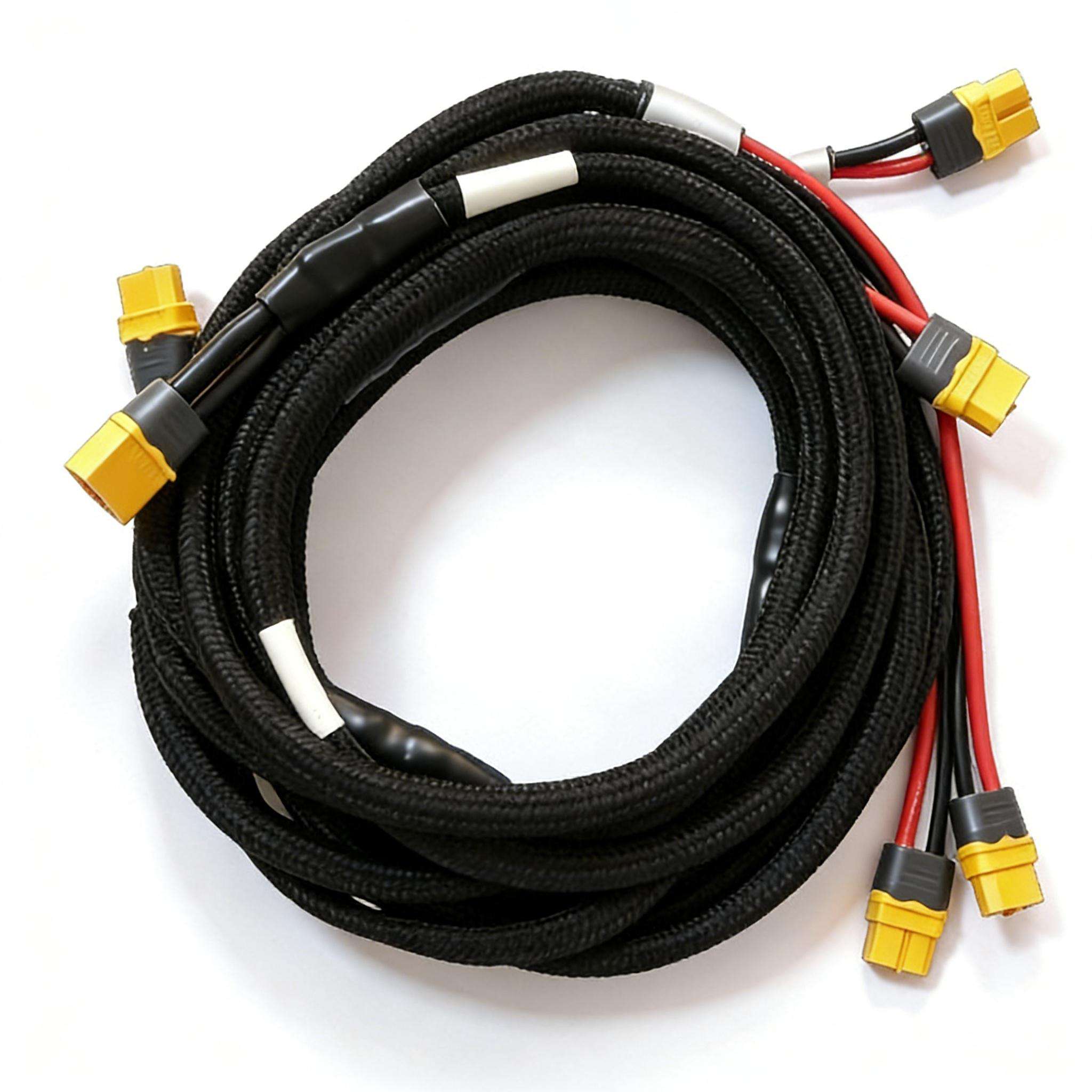
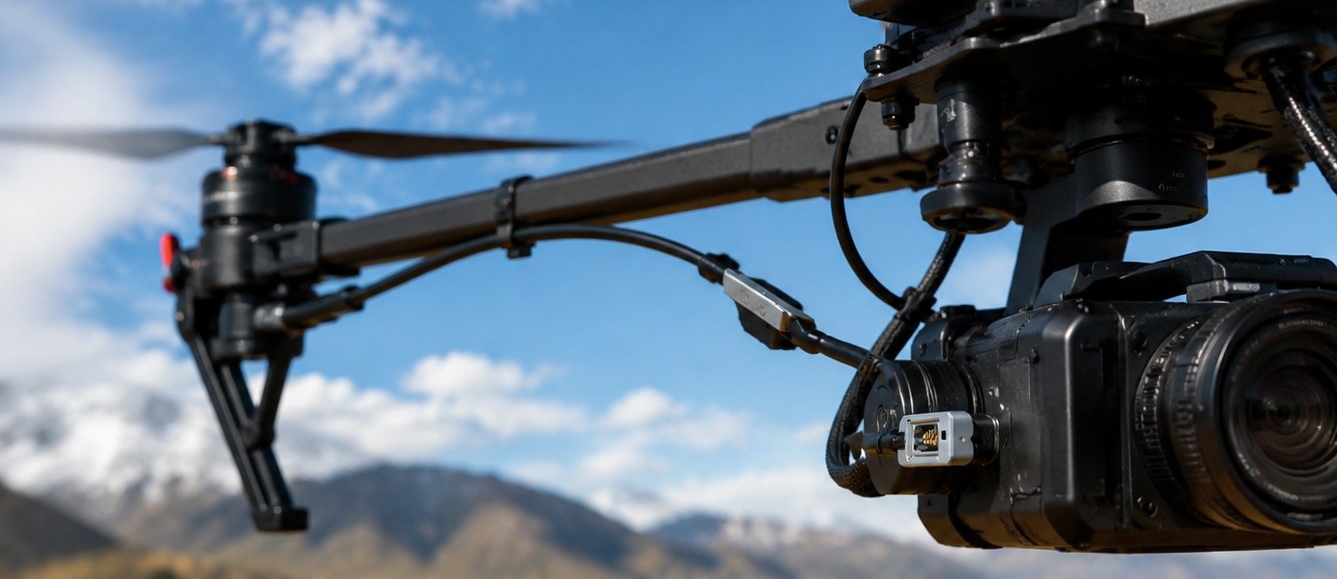
Every UAV project handles a similar core challenge. The aircraft requires lightweight wiring. Yet, it must keep steady power. It also requires clear signals and solid high-speed data. A carefully crafted drone cable helps extend flight time. It guards navigation precision. It ensures good payload results. Furthermore, it boosts assembly speed. The system achieves these goals without adding extra mass.
Why Weight and Bandwidth Must Be Designed Together
Weight impacts endurance right away. Battery size, motor output, payload load, and airframe drag determine flight duration. Still, builders often ignore the wiring. This occurs since individual wires seem tiny. Inside a small UAV, the total span of battery leads and sensor wires grows quickly. RF lines add to this total. Camera connections and data links play a part too. Combined, they create a heavy payload burden. The wiring setup must handle this data flow. Meanwhile, it must remain supple enough to fit tight arms. It needs to bend for folding frames and regular upkeep.
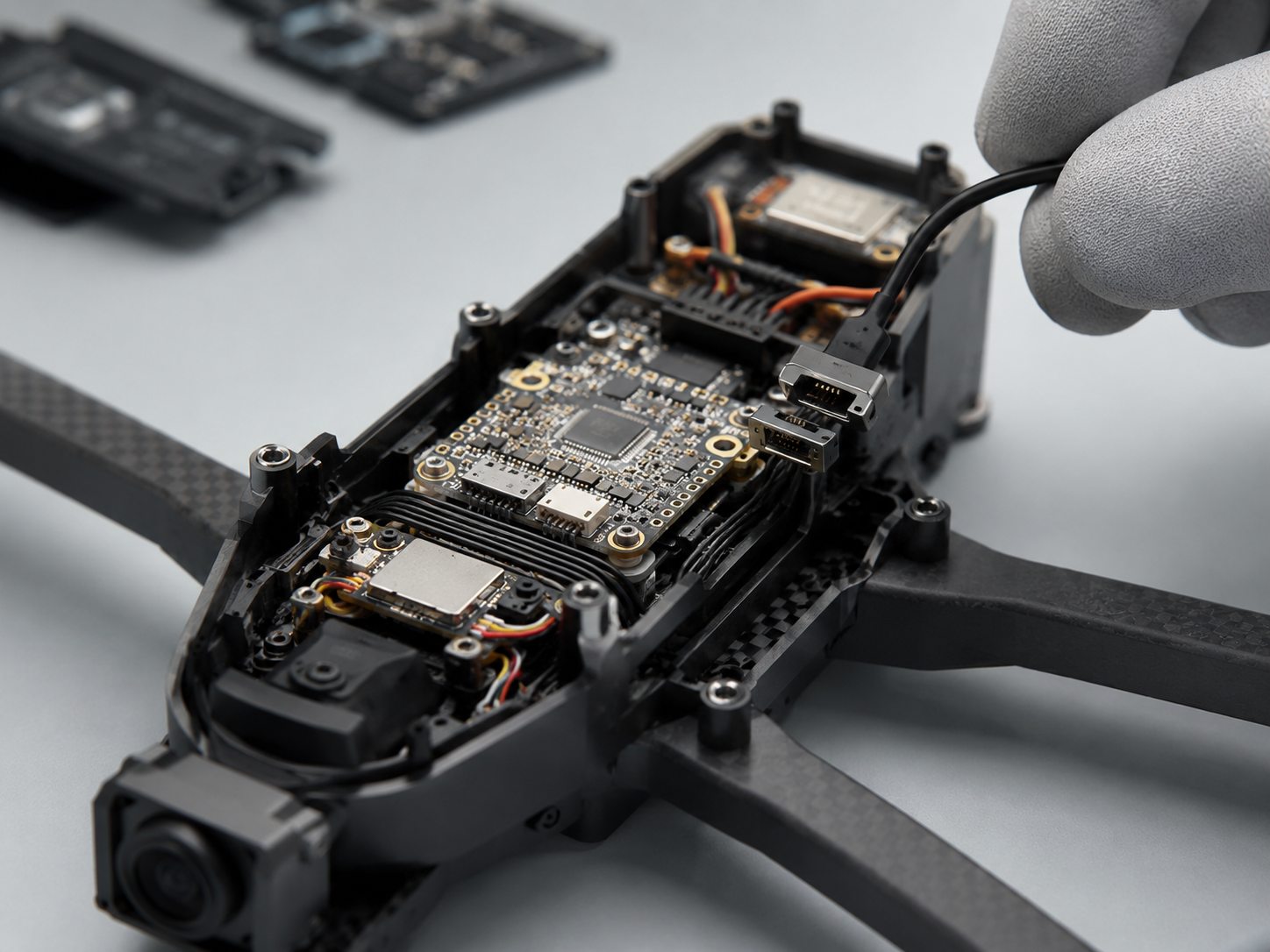
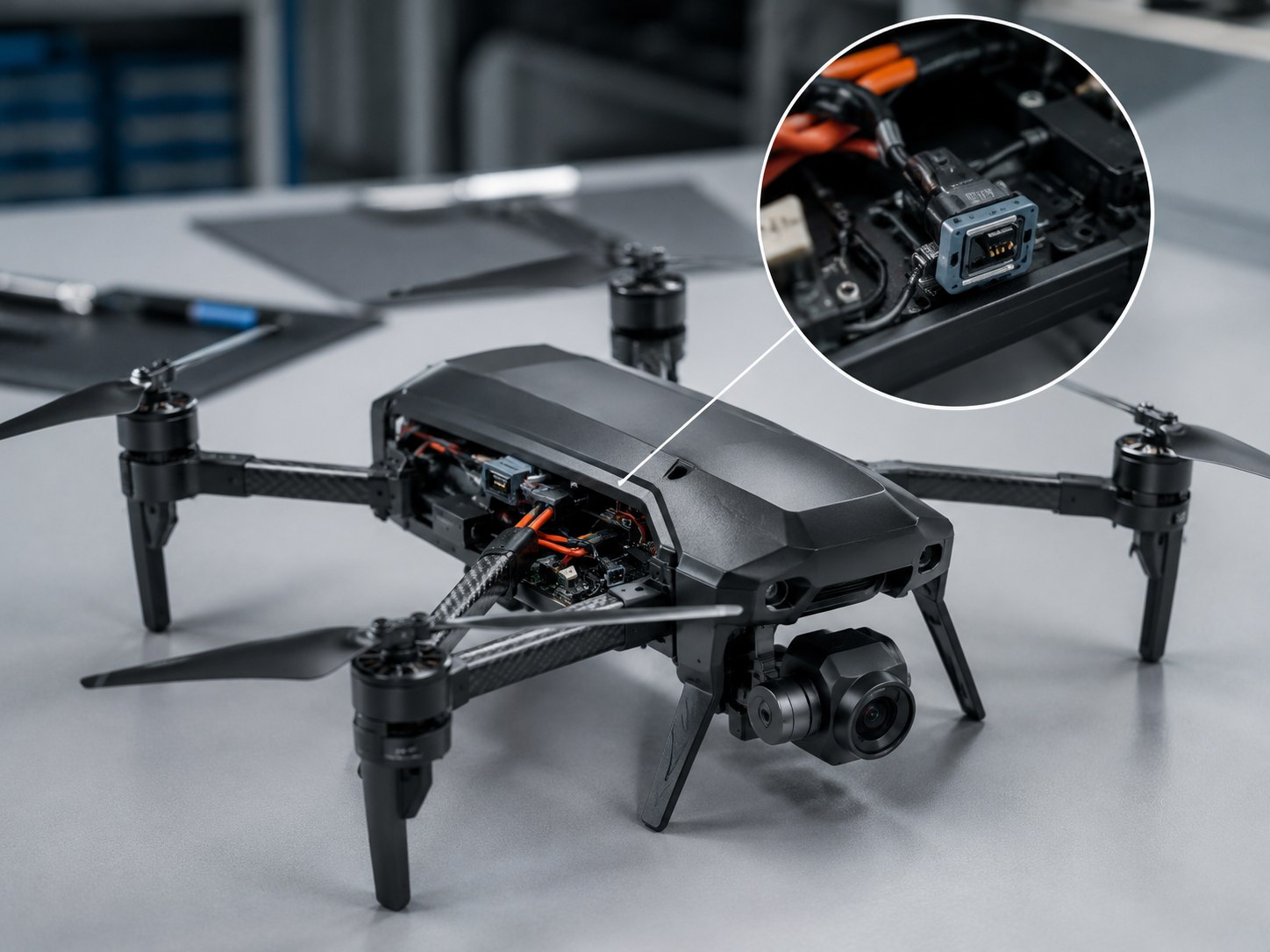
We view the UAV cable harness as a planned network. It is more than a simple bunch of loose wires. Power, control, RF, and fast data lines possess unique electrical demands. They have distinct physical needs too. A smart layout places copper only where the current requires it. It applies shielding only to protect signal clarity. Also, it features connector types that handle expected vibration and power levels. They must survive repeated plugging. These plugs must drop neatly into the open mounting spots.
How Wire Gauge Controls Current, Heat, and Mass
Choosing a wire gauge begins with current load and total length. It relies on acceptable voltage drop and expected heat levels. Allowed weight plays a role too. A 22AWG wire holds less resistance compared to a 26AWG version. Thus, it moves more power. Yet, it brings extra weight and feels stiffer. A 26AWG drone cable can serve as the ideal pick for low-power sensors. It works well for GPS, telemetry, and battery tracking. This choice cuts down mass. It also bends much better.
Why High-Flex Silicone Wire Is Common in UAV Routing
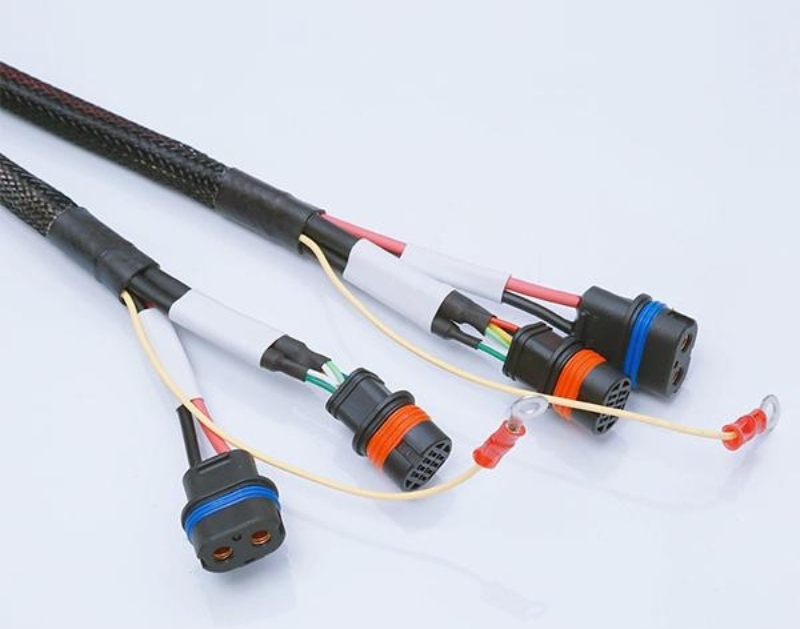
Silicone wire appears frequently inside drone cable setups. It stays highly bendable across a wide temperature span. Plus, it survives constant flexing far better than stiff PVC types. PVC remains useful inside safe, budget-focused spots. Still, it often turns rigid during cold weather. It might need a thicker outer layer to match silicone’s easy handling.
Super-soft silicone wire containing very fine tinned copper strands proves extremely helpful. It routes smoothly near folding arms and battery trays. It fits neatly around gimbals and tight control boxes. Our silicone wire lineup features thin choices like 30AWG and 26AWG for signal paths. We provide thicker gauges like 20AWG, 16AWG, 10AWG, and 8AWG for heavy-power routes. This variety allows the setup to suit every single subsystem. Therefore, you stop relying on just one wire style for the whole drone.
How Shielding Protects GPS, RF, and Digital Links
EMI creates a real danger during flight. ESCs, motors, and switching regulators generate noise. Heavy-power battery lines cause similar trouble. RF modules and ground radar can disrupt clean signals. Satellite links and local radio networks add to the problem. They harm faint navigation and payload data.
Shielding requires careful placement. It should never be too heavy. Braided metal guards improve physical strength. They also block low-frequency interference. Aluminum foil wrapping delivers excellent surface coverage. It stops high-frequency static very well. Double shielding merges both techniques. This approach works perfectly for strict RF needs. It suits fast signal routes too. Our shielded wire products hold 1 to 10 cores. They span from 22AWG to 30AWG. We supply braided types and aluminum foil designs. We make dual-layer builds as well. These solutions deliver space-saving power and clear data flow.
How Bandwidth Changes Cable Geometry
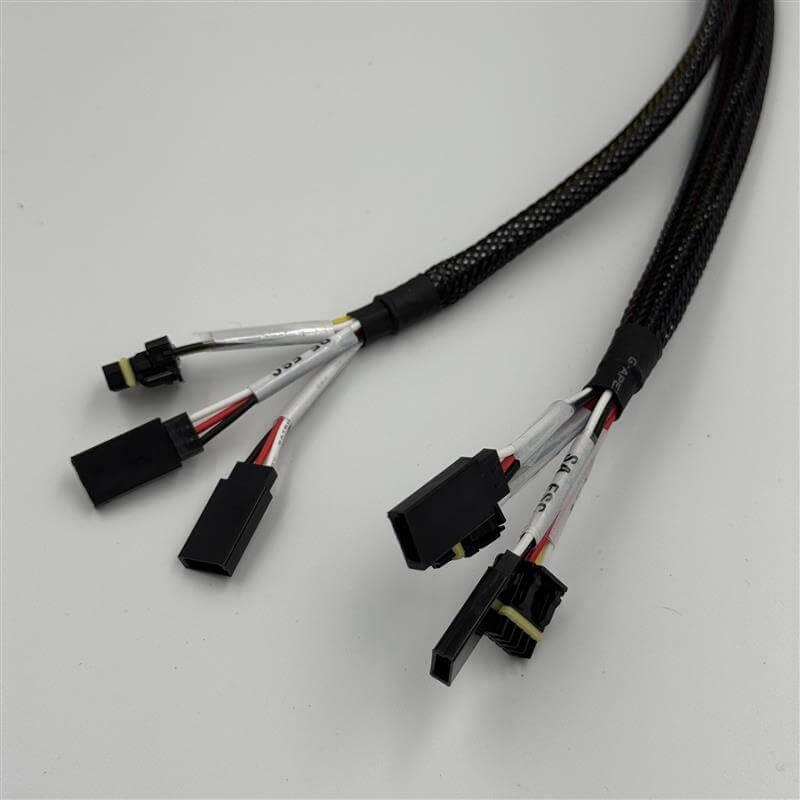
CAN Bus shows up often in UAV control networks. It stays tough and straightforward. It fits flight controllers and smart batteries perfectly. It works for GPS trackers and extra add-ons. The wiring does not have to be thick. Still, it demands a steady twisted shape. It needs dependable plugs. It also calls for careful placement away from heavy-power zones.
Our military drone antenna signal line handles high-frequency RF data transfers. It links the main aircraft to the antenna unit. It relies on a silver-plated copper core. It uses PTFE covering for safety. It includes aluminum foil paired with a silver-plated copper mesh for double shielding. An FEP outer jacket protects the whole bundle. This build supports Ka/Ku-band data sending. It boasts low signal loss. It keeps phase levels steady. The wire bends in tight circles easily. It functions smoothly between -55 C and 200 C. It maintains a standard 50-ohm RF impedance.
Key Cable Choices for UAV Engineers
|
Design item |
Typical technical choice |
Why it matters in UAVs |
|
Battery and ESC power lines |
12AWG-18AWG, XT30/XT60/XT90/T-type/JST-PH |
Handles maximum power flow while managing voltage drops and extra heat |
|
Battery tracking |
AWG#24-AWG#30, JST/PH/XH, voltage accuracy up to +/-1.5mV |
Supplies the BMS and safety boards with live cell voltage and heat details |
|
Signal and flight control |
22AWG-30AWG, twisted pair or differential pair where needed |
Lowers EMI noise for CAN Bus lines, sensors, GPS tools, and steering data |
|
High-flex bending paths |
30AWG-8AWG extra-soft silicone wire with tinned copper |
Boosts bending lifespan inside tight frames, folding arms, and power bays |
|
RF antenna connection |
50-ohm structure, PTFE/FEP, double shielding, -55 C to 200 C |
Maintains military UAV antenna links during heavy vibration and high EMI conditions |
|
Fast data transfer |
Ethernet, USB3.0/USB3.2, PoE-ready design when required |
Moves camera, LiDAR, AI system, and payload files without losing quality |
Where Songyuan Supports Custom UAV Cable Assemblies
Songyuan Technology creates and builds custom UAV cable harness solutions. We target space-saving and highly dependable uses. We supply basic electronic wires and shielded power lines. We make flat ribbon cables too. We also deliver fresh energy storage wires alongside unique cable groups. Plus, we provide battery safety board data lines. We sell super-soft silicone wire and USB data links. We construct special harnesses for specific tasks as well.
We offer direct manufacturing, custom tweaks, and strict quality checks. We manage shipping and post-sale help too.
FAQ
What wire gauge is best for drone power cables?
The right drone power cable size relies on maximum current and total length. It connects directly to voltage loss and heat buildup. Battery cords and ESC wires normally utilize 12AWG to 18AWG. On the other hand, low-power sensor and tracking lines generally require 24AWG to 30AWG.
Why do drones use silicone wire instead of PVC wire?
Silicone wire feels much softer and bends easier. This fact matters greatly during tight installations. It helps in freezing weather too. Builders pick it frequently for paths requiring heavy bending. Such areas include battery slots, folding arms, and small UAV bodies.
When does a drone need an UAV ethernet cable?
A drone requires a UAV ethernet cable when flying with sharp, high-resolution cameras. It needs this cord for LiDAR tools and AI systems. Mission computers demand it too. These advanced parts need steady, rapid data flow. The wire’s design has to manage impedance and stop crosstalk. It must include strong shielding. It also needs a safe bend radius and tough plugs.
Can a custom UAV cable assembly reduce drone weight?
Yes, absolutely. A tailored UAV cable harness uses the exact AWG size. It picks the perfect insulation and shielding. It pairs the correct plug and exact length for every single part. This method cuts out useless copper weight. It thins down thick outer jackets. It drops any extra, unused wire length. At the same time, it boosts overall build quality.