

What is an Automotive Wire Harness and How Does It Power Your Vehicle
Time : June 18, 2026 View : 326
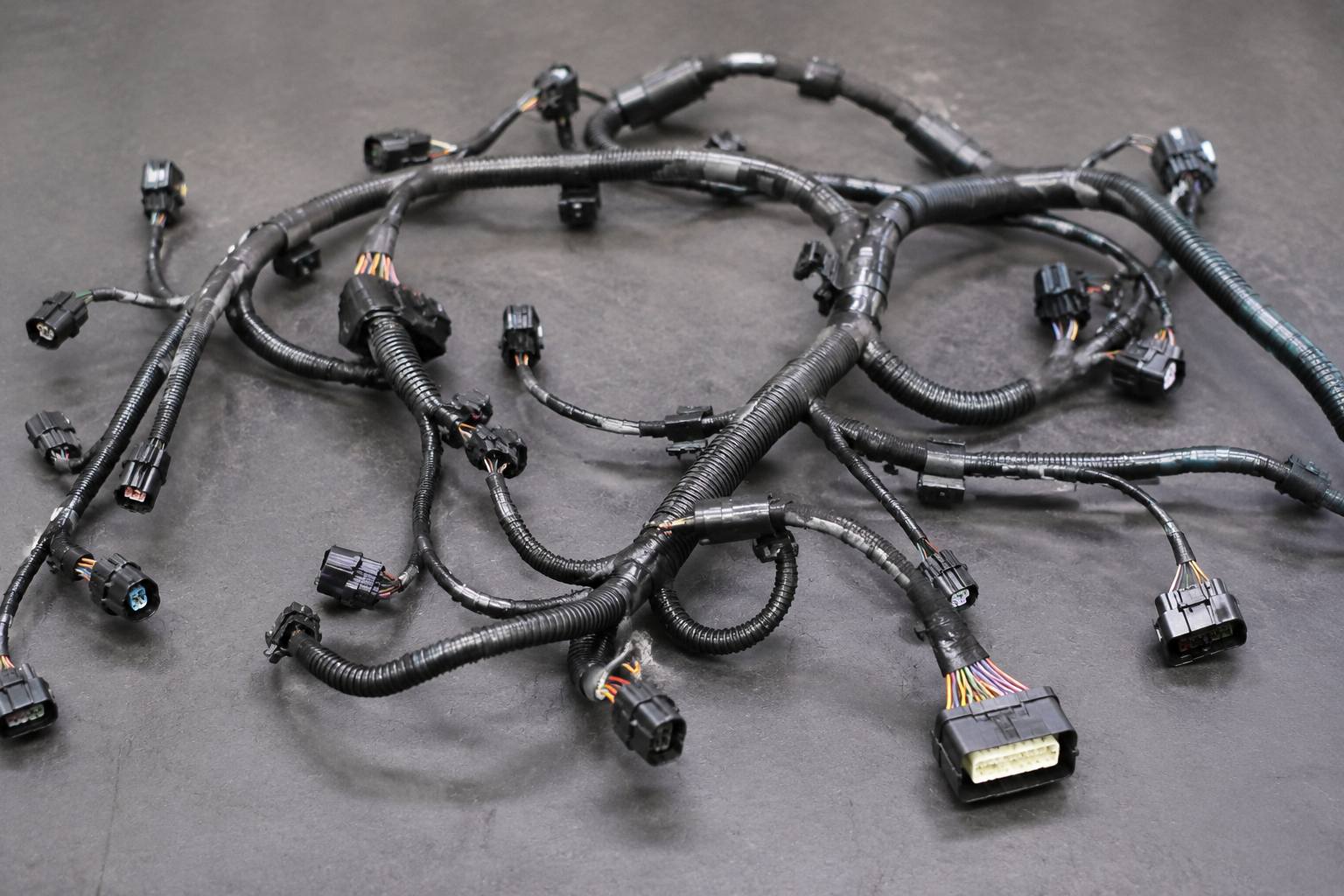
What is an Automotive Wire Harness
The Automotive Wire Harness is a sophisticated assembly that organizes the vehicle electrical system into a single, manageable unit. This integration not only saves space but also protects individual wires from the damaging effects of vibrations, moisture, and heat. By bundling wires together, manufacturers like Songyuanwire. ensure that the electrical architecture remains organized and easy to maintain over the vehicle lifespan.
Core Architecture: Wires, Terminals, and Connectors
High-performance car wiring harnesses consist of several individual layers that are meticulously developed to ensure their functionality.
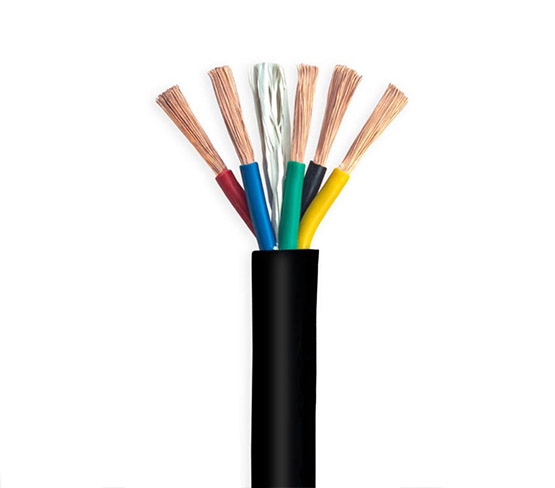
Conductors: Typically made of multi-strand 4N oxygen-free copper or tinned copper to ensure high conductivity and flexibility under constant vibration.
Insulation: By using advanced materials such as PVC, XLPE, or Silicone rubber, the electrical insulation and environmental stress capability are improved.
Terminals and Connectors: The terminals and connectors are usually produced by precise stamping, which is plated with gold or tin to prevent the oxidation of contacts and maintain the contact resistance at 10mΩ or below.
Protective Sheathing. Corrugated, braided, or heat-shrink type sheathing which protects the wires within from physical damage or attack from chemicals.
Diversity of an automotive wiring loom in Vehicle Architectures
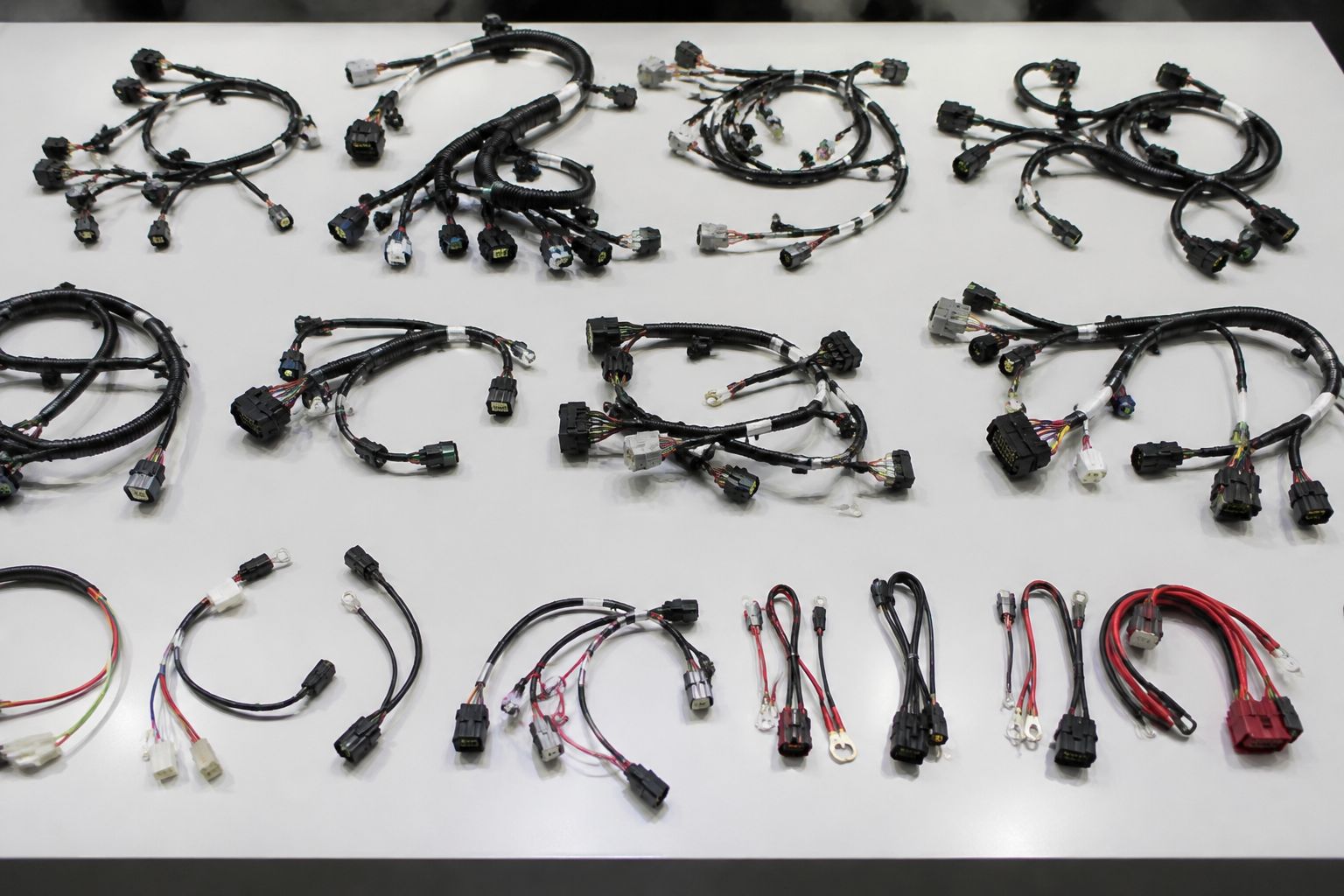
In modern cars, different areas need different wiring harnesses for different functions.
Engine harness: Designed for extreme heat and high-vibration zones. It connects fuel injectors and sensors in these areas.
Chassis Harness: Designed to resist damage from gravel, moisture, and road salts.
Instrument Panel Harness: High-purity signal transmission for Digital displays and Infotainment systems.
Door and Body Harnesses: Flexible, to withstand bending for repeated use at hinge points.
How a car wiring harness Powers Critical Vehicle Systems
A car wiring harness is responsible for distributing voltage from the battery or alternator to power-hungry components while simultaneously carrying low-voltage signals for electronic control. In traditional internal combustion engines, the harness manages the ignition timing and fuel delivery, but the complexity increases exponentially in electric vehicle (EV) architectures.
High-Voltage Transmission for New Energy Vehicles
With New Energy Vehicles (NEVs) emerging as the fast-growing sector in the automotive market, suppliers of wire harnesses for vehicles, such as Songyuanwire, have to face new challenges of high-voltage power systems.
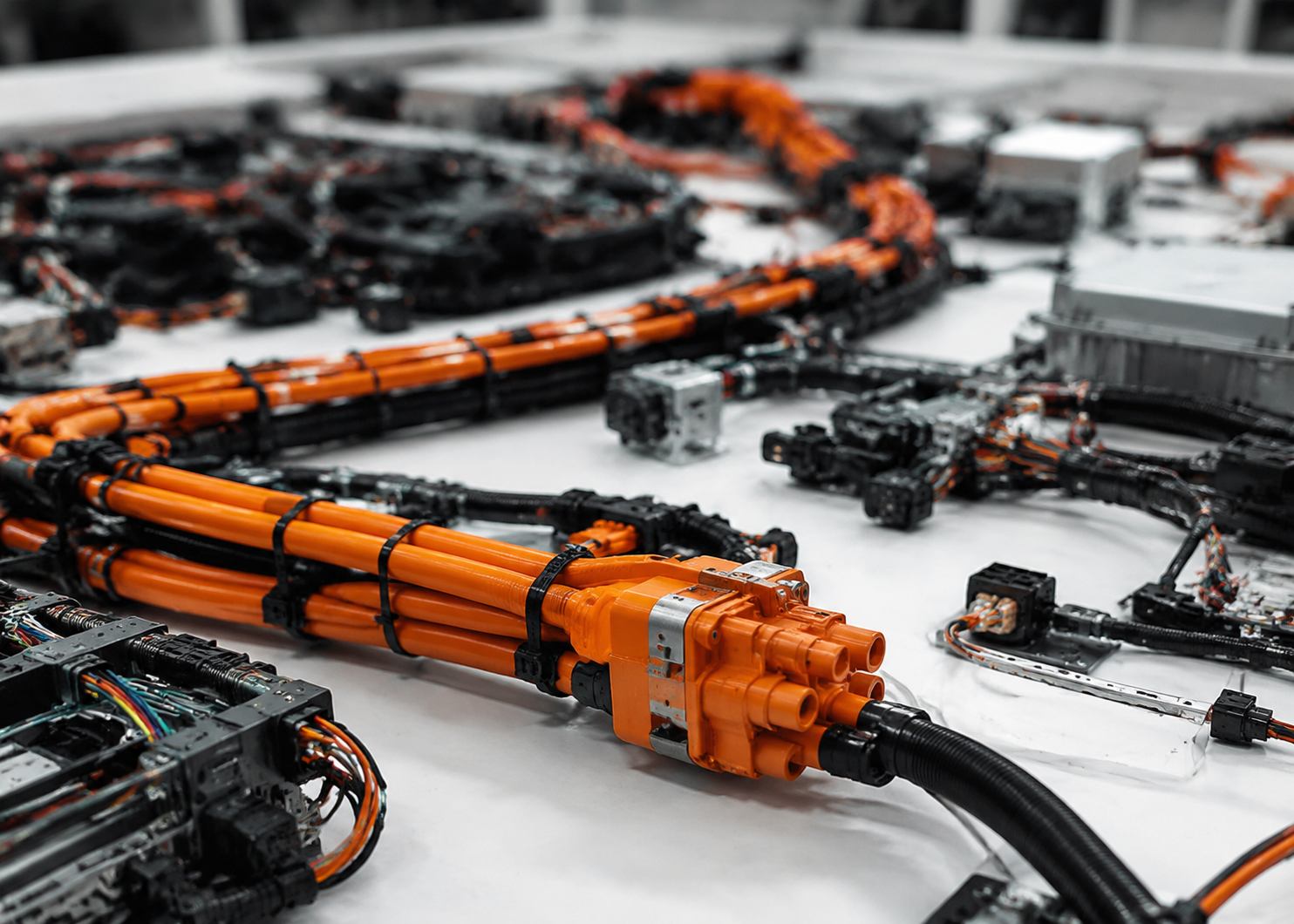
Power Electronic Units (PEU): The harnesses are used for high-voltage connections between the battery pack, inverter, and the drive motor.
Charging Assemblies: these shall be designed as standardized interfaces for AC- and DC-charging. The Charging Assemblies shall be designed for currents up to 800 A and voltages up to 2000 V.
Battery Management Systems (BMS): Specialized acquisition lines capturing the individual cell voltages and module temperatures with precise signals.
Signal Integrity in Precision Automotive Sensors
Automotive wiring looms provide more than just a power supply. They guarantee the zero-delay communication of sensors with the Vehicle Control Unit (VCU). Shielded data acquisition lines, for example, protect critical information such as the speed of a motor or the required braking distance from interference by EMI. High-frequency coaxial cables are connected to the antennas of car components and enable advanced driver-assistance systems (ADAS).
Why Material Selection Defines Car Wiring Harness Performance
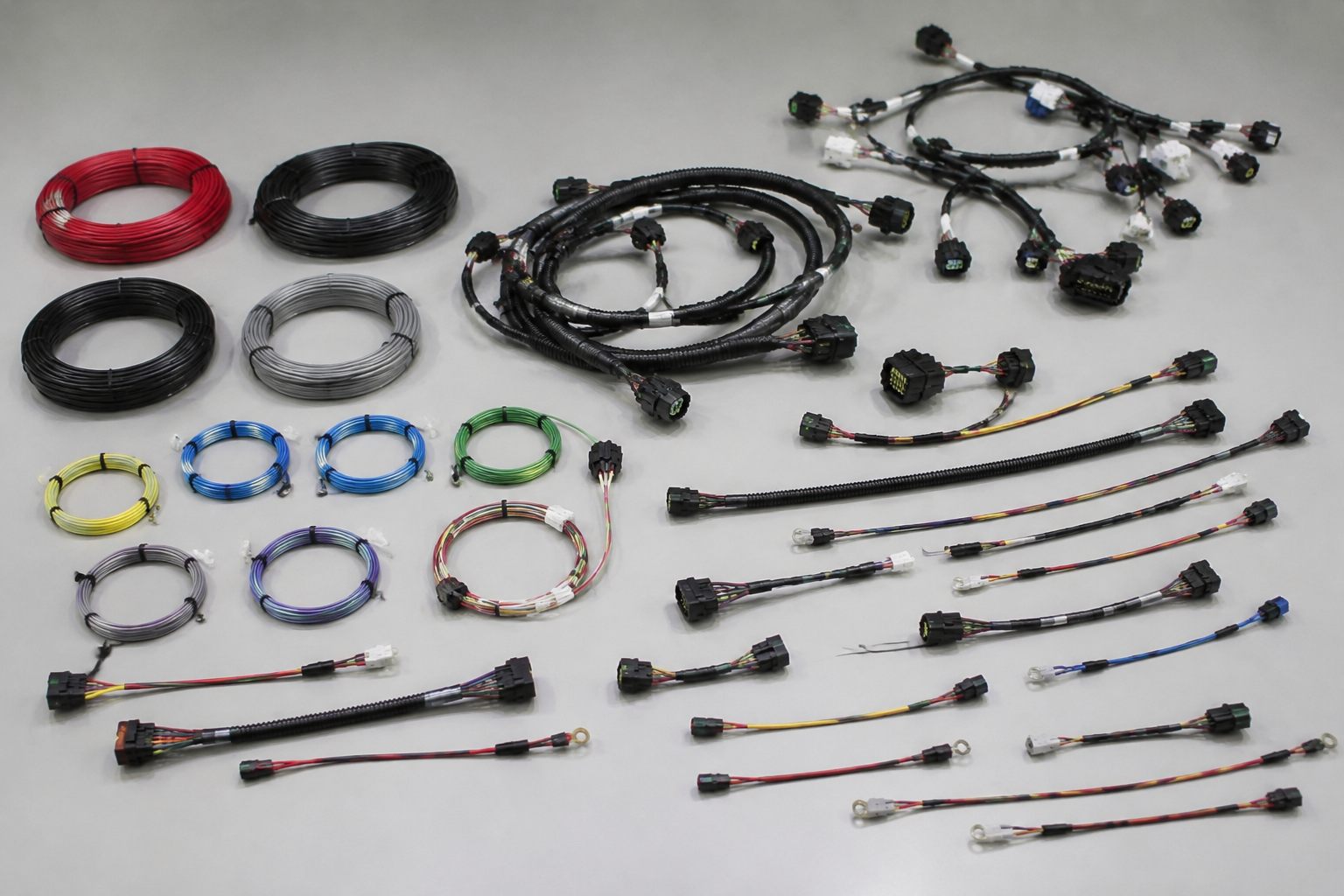
The automotive wire harness is a complex assembly of many parts, including wires of different gauge and length, all tied together with harness fasteners. The harness’s ability to last a long time and perform well depends upon the thermal and chemical properties of its components, which can fail under the rigorous conditions found in an engine bay or on the outside of a vehicle’s chassis when using standard parts.
Thermal Management with PTFE and Silicone Insulation
The engineering teams at Songyuanwire make use of high-grade insulation in their fight against extremely high temperatures.
PTFE (Teflon): As PTFE is able to withstand temperatures of above 200℃, plus is extremely inert to chemical solvents, it makes it a great material for various applications.
Silicone Rubber: Extremely flexible and fatigue-resistant, the material is still capable of performing in extreme environments from -55℃ up to +200℃.
XLPE (Cross-linked Polyethylene): High mechanical strength, high temperature resistance. XLPE insulation is used for high-load power lines compared to standard PVC insulation.
Waterproof Integrity and IP69K Protection Standards
To ensure that a car wiring harness is able to function even in wet or corrosive environments, certain protection ratings must be met by these components.
Most enclosures and connectors are rated to IP67 / IP68 to enable immersion in water without water entering.
IP69K: This degree of protection is reserved for very high-pressure and temperature washdowns, typical of engine compartments where harnesses are subject to 80℃ water jets, etc.
Oil and UV Resistance – some of our automotive wire looms are covered with special sheaths to prevent lubricants or direct sunlight from degrading the wiring.
What to Seek in Professional Automotive Wire Harness Suppliers
Selecting the correct automotive wire harness supplier is critical as this impacts every stage of the production process and even end-user safety. The correct manufacturer will provide more than simple assembly of a wire harness; they will provide full engineering support.
R&D Excellence and Custom 3D Prototyping
The leading suppliers, such as Songyuanwire, stand out from the rest of the suppliers with their advanced technical research.
Customized Solutions: We go beyond standard products and develop solutions for special pains in special situations by precise technical adaptation.
Prototyping Process: Using our CAD files to create 3D models and functional samples before entering into mass production.
Integration Capabilities: Integrate power, signal, and data transmission into single integrated products to support vehicle assembly.
Quality Assurance through Global Standard Compliance
Operational excellence at The Executive Centre is measured by adherence to international certifications such as ISO 9001:2015.
Compliance with Military & Automotive Standards such as MIL-STD-810G and ISO 6722 for the most demanding applications and environments.
Conclusion
The Automotive Wire Harness is much more than just a bundle of wires. It is a system critical to mobility. The wiring loom of a modern vehicle has to provide high-voltage safety for electric vehicles as well as signal purity for smart sensors. High-quality Automotive Wire Harnesses are thus the core of a reliable mobility system. Songyuanwire can draw on advanced material science and precise manufacturing techniques. The supplier thus is able to develop high-performance Car Wiring Harnesses for global markets and support industries with innovative wiring solutions.
FAQ:
How do I choose the right Automotive Wire Harness for my project?
A: What are the most important factors to evaluate when selecting suppliers for automotive wire harnesses, such as Songyuan Technology? The most important factors to evaluate suppliers of automotive wire harnesses are: 1) Development capacity, 2) ISO certification, 3) Ability to provide custom wire harnesses with 3D design & testing.
Why is the IP69K rating important for an Automotive Wire Harness
- Why should a high-performance Automotive Wire Harness have an IP69K protection rating? B. Songyuan Technology’s Automotive Wire Harness is designed with an IP69K protection rating. It can be cleaned with high-temperature and high-pressure water spray in the engine room and other heavy-duty chassis areas.
How does an automotive wiring loom support EV technology
Q: What is a special wiring loom for cars to manage the power requirements for electric cars? A: Automotive wiring loom for electric vehicles from Songyuan Technology contains high-voltage-resistant wires and multi-layer screening. Thus, it is possible to transport energy efficiently from the battery through the PEU to the motor.
What materials are best for a car wiring harness in high-heat zones
Q: What materials would be used to make a car wiring harness that is exposed to temperatures above 200℃? A: For such high-heat applications, most professional automotive wire harness suppliers use PTFE (Teflon) or high-grade Silicone rubber as the insulation material for the car wiring harness. This ensures that the wiring maintains its functionality without any deterioration.


related news
-
What is an Automotive Wire Harness and How Does It Power Your Vehicle
-
 How to Identify Reliable Drone Wire Suppliers in a Competitive Market?
-
 What Are the Common Challenges in Cable Harness Assembly?
-
 How to Evaluate a Custom Wire Harness Supplier for Drone Reliability in 2026
-
 How Lightweight Cables Materials Directly Impact UAV Flight Efficiency
