

How Can Drone Wiring Harness Protect Long-Range Signals?
Time : June 26, 2026 View : 321
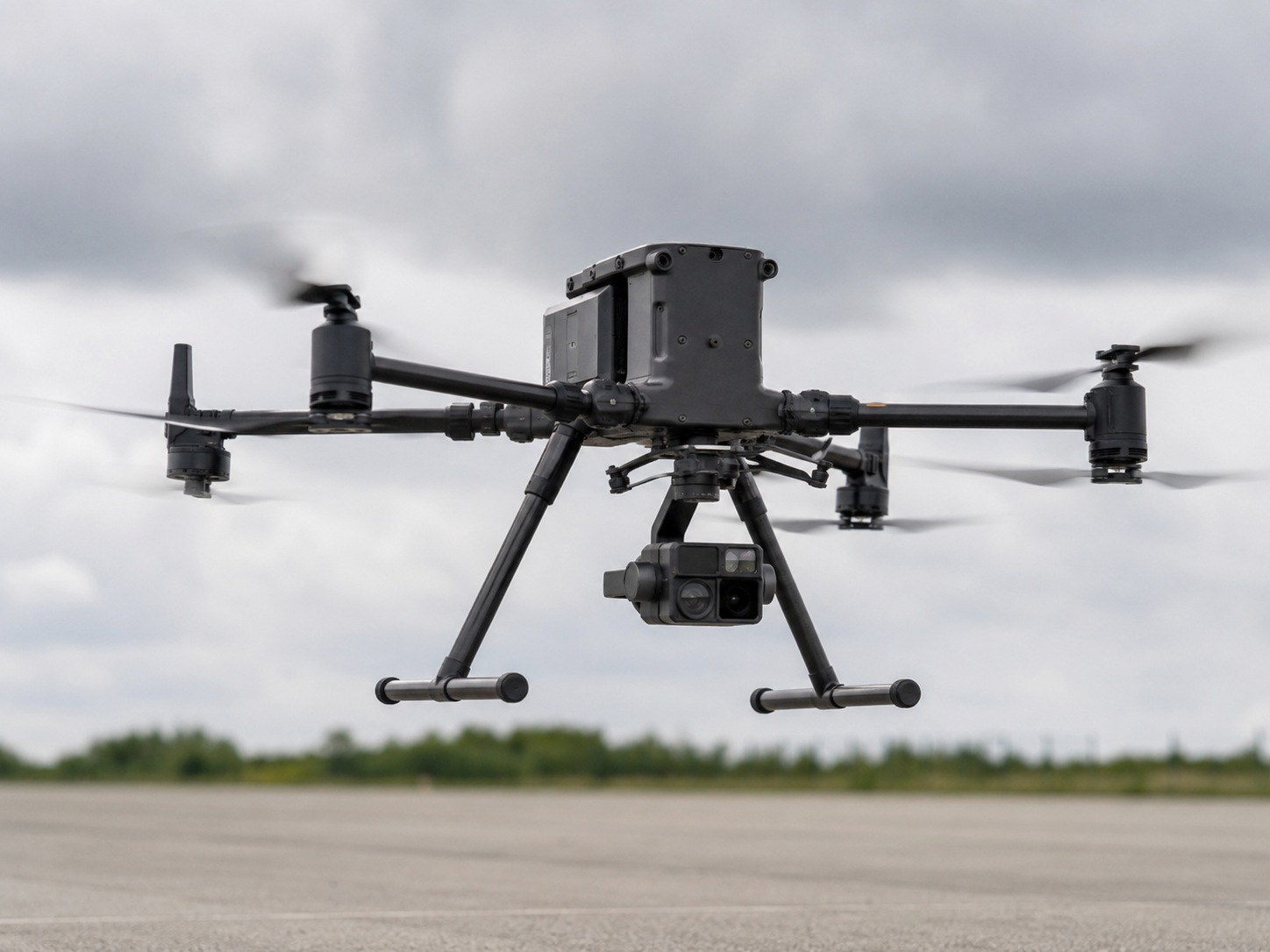
Long-range drones are moving into heavier work. They are used for border patrol, mapping, emergency inspection, industrial monitoring, and defense communication. In these missions, flight distance is not the only challenge. A drone may have a strong antenna, a precise flight controller, and a high-capacity battery, yet the signal can still become unstable when the drone wiring harness is not designed for high-frequency transmission.
At Songyuan wiring harness, we look at a drone wiring harness as part of the signal chain, not just an accessory inside the aircraft. The antenna signal cable, the internal cable drone layout, and even the routing distance from a drone battery cable can affect transmission quality. For long-range drones, the right harness must control signal attenuation, electromagnetic interference, vibration stress, heat, and compact-space routing at the same time.
Why Does Signal Integrity Matter in Long-Range Drone Transmission?
Signal integrity decides whether command data, telemetry, positioning information, and antenna communication remain clean over distance. A long-range drone does not fail only when the signal disappears completely. In many cases, small signal distortion causes delayed response, unstable data return, reduced antenna efficiency, or poor image transmission.
A drone wiring harness for long-range use must therefore do more than connect two modules. It must protect the waveform during transmission.High-frequency transmission makes this problem more obvious. Ka and Ku band applications are more sensitive to cable loss and phase change than ordinary low-speed signal wiring. That is why the antenna signal cable uses a silver-plated copper conductor, PTFE insulation, double-layer shielding, and an FEP sheath. These details are not decorative specifications. They are chosen to support stable high-frequency behavior in vibration-heavy and electromagnetically complex drone environments.
What Causes Signal Loss Inside a Drone Wiring Harness?
Signal loss inside a drone wiring harness usually comes from three connected problems: cable structure, electromagnetic noise, and mechanical stress. A drone is compact, but it carries multiple noise sources. Motors, control boards, RF modules, sensors, and the drone battery cable may sit close to one another. When the wiring path is not planned well, signal lines may receive unwanted interference from power lines and switching components.
Cable length is another factor. Longer internal routing can increase attenuation, especially when the cable passes through narrow bends or high-interference zones. In a compact UAV frame, even a short distance can become electrically difficult if the antenna line runs too close to the battery discharge path or motor control wiring.
Mechanical movement also matters. Drones face vibration from propellers, sudden acceleration, landing impact, and long outdoor flight cycles. A weak cable may still pass a simple bench test, but repeated vibration can loosen the interface, fatigue the shielding layer, or change the cable geometry. Once the structure changes, high-frequency signal performance may become inconsistent.
How Does the Antenna Signal Cable Fit Drone Applications?
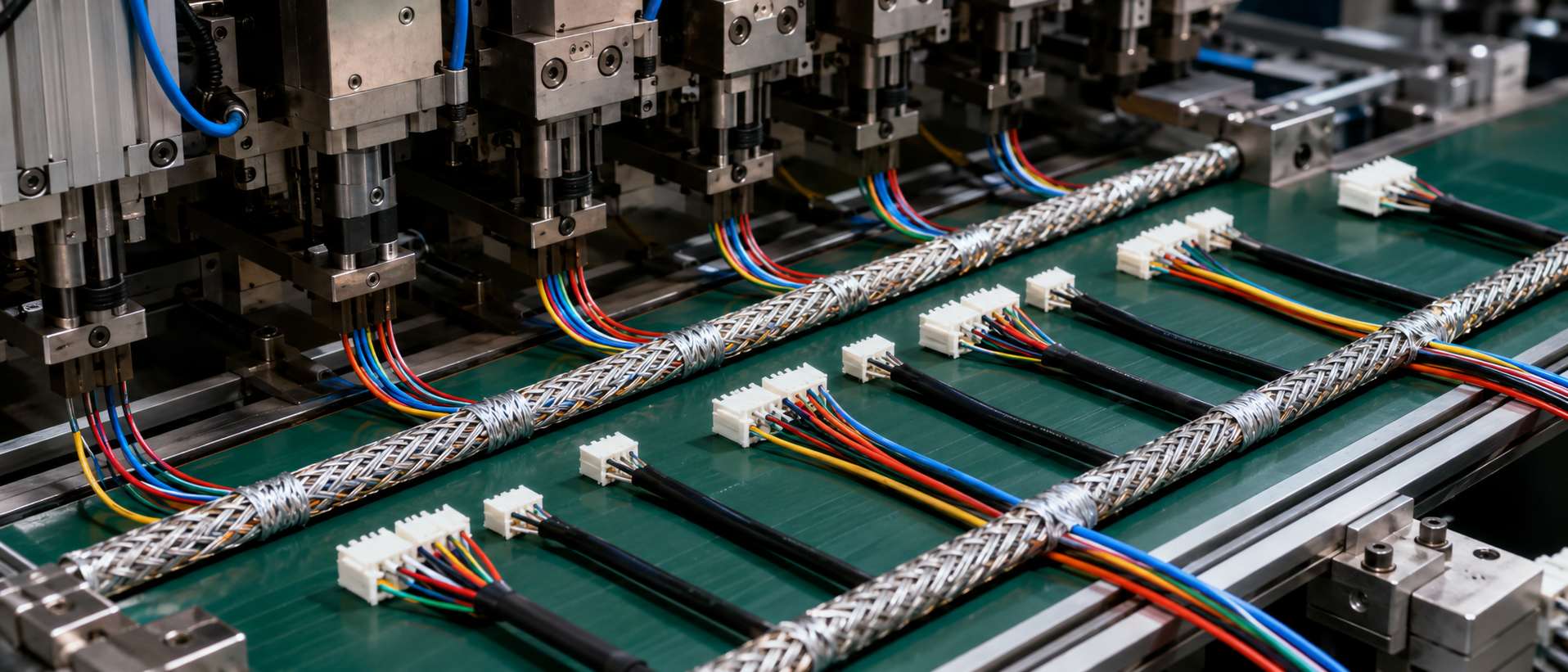
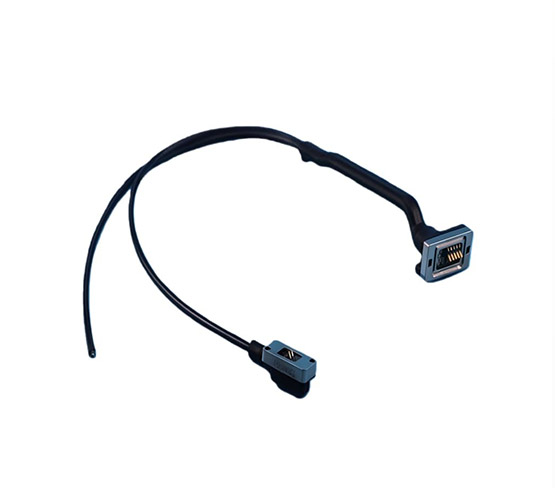
Military unmanned aerial vehicles is the most relevant product for long-range drone transmission wiring. Its core function is RF and data signal transmission between the drone and the antenna, which matches the signal integrity challenge directly.
|
Performance Area |
Product Design |
Value for Long-Range Drone Wiring |
|
High-frequency signal path |
Supports Ka/Ku band transmission |
Helps maintain stable antenna communication in long-range missions |
|
Conductive structure |
Silver-plated copper conductor |
Supports low-loss RF signal transmission |
|
Insulation system |
PTFE insulation |
Helps maintain electrical stability under high-frequency conditions |
|
Shielding structure |
Aluminum foil plus silver-plated copper braided mesh |
Reduces EMI impact in complex drone electrical environments |
|
RF impedance |
Typically 50Ω for RF antennas |
Matches common antenna signal transmission requirements |
|
Compliance direction |
MIL-DTL-16878, MIL-STD-810, MIL-STD-461 |
Supports environmental and electromagnetic compatibility expectations |
How Does Shielding Improve a Cable Drone System?
Shielding is one of the most important defenses in a cable drone system. A drone carries both weak signal paths and strong power paths. When the antenna cable receives interference from the drone battery cable, motor wiring, or radio-frequency devices, the signal may become noisy before it reaches the antenna.
The antenna signal cable uses double-layer shielding with aluminum foil and silver-plated copper braided mesh. Aluminum foil helps provide broad coverage against electromagnetic interference, while the braided mesh adds conductive shielding and mechanical stability. For drones operating in high-vibration and complex electromagnetic environments, this structure helps keep the signal path more consistent.
Our case experience with weak-signal and high-interference applications supports this approach. In an ECG instrument harness case, high-purity silver-plated copper wire was used to reduce signal loss, while the shielding layer isolated 50Hz AC and EMG interference, enabling stable transmission of mV-level weak signals. The application is medical, not drone-related, but the engineering lesson is relevant: weak signals need conductor quality, shielding design, and material stability.
How Should Drone Battery Cable and Signal Cable Be Managed?
A drone battery cable carries power. A drone antenna cable carries a signal. They should not be treated the same during harness design. The power cable may introduce electromagnetic noise, especially near high-current battery discharge areas, motors, or power-control modules. If the drone wiring harness places RF signal lines too close to a drone battery cable without shielding or spacing, signal stability can suffer.
In practical design, the antenna cable should follow a clean route whenever possible. It should avoid tight bundling with high-current lines. When crossing is unavoidable, the routing angle, shielding grounding, fixing method, and bend radius should be reviewed carefully. Heat-shrink tubing, fixing clips, marking tubes, and protective sleeves can also improve assembly consistency and later maintenance.
What Materials Make a Drone Wiring Harness More Reliable?
Material selection determines whether a drone wiring harness can survive real flight conditions. Silver-plated copper is important for signal performance because it supports low-loss transmission. PTFE insulation is valuable because it maintains stable electrical behavior under demanding conditions. FEP sheath material supports high-temperature operation and environmental protection.
For long-range drone wiring, temperature tolerance is not a small detail. The antenna signal cable operates from -55°C to 200°C. This helps the drone wiring harness remain stable across cold outdoor starts, heat generated by onboard electronics, and mission environments where temperature changes quickly.
Conclusion
Long-range drone communication is not protected by the antenna alone. It depends on the entire signal path. A well-designed drone wiring harness controls attenuation, reduces electromagnetic interference, supports stable impedance, resists vibration, and fits the limited space inside the aircraft.
The next step is not simply choosing a cable diameter. It defines the full wiring environment: frequency band, antenna interface, cable length, shielding level, routing path, temperature range, and nearby drone battery cable layout. Songyuan wiring harness can support custom development based on these project details, helping buyers turn signal integrity from a risk point into a stable design advantage.
FAQ
How long does Songyuan wiring harness need for a drone wiring harness sample?
Sample timing depends on the connector, shielding structure, cable length, and whether non-standard parts are required. For custom projects, buyers should provide drawings, interface requirements, application environment, and test standards first. A prototype and quotation can then be prepared before sample production and inspection.
Can a drone wiring harness reduce signal interference from a drone battery cable?
Yes, a properly designed drone wiring harness can reduce interference by using shielding, grounding treatment, suitable routing distance, stable connectors, and controlled cable structure. The antenna signal cable should not be tightly bundled with a high-current drone battery cable unless the design has been reviewed for EMI control.
What drone wiring harness is suitable for long-range antenna transmission?
For long-range antenna transmission, the most suitable choice is a high-frequency antenna signal cable designed for RF and data transmission. The military unmanned aerial vehicle antenna signal cable is suitable because it supports Ka/Ku band transmission, low attenuation, phase stability, double-layer shielding, and typical 50Ω RF antenna impedance.
Does Songyuan wiring harness provide after-sales support for drone wiring harness orders?
Yes. After delivery, support can include communication through service channels, feedback collection, product iteration assistance, warranty service, and clear return or exchange procedures. For drone wiring harness projects, this is useful when buyers need layout revisions, connector adjustments, or batch consistency support.


related news
-
How Can Drone Wiring Harness Protect Long-Range Signals?
-
 What Are the Common Challenges in Cable Harness Assembly?
-
 How to Identify Reliable Drone Wire Suppliers in a Competitive Market?
-
 What is an Automotive Wire Harness and How Does It Power Your Vehicle
-
 How to Evaluate a Custom Wire Harness Supplier for Drone Reliability in 2026
