

Why Energy Storage Cables Matter for Safe, Reliable Power
Time : October 22, 2026 View : 307
Walk into a substation or a data center and you’ll hear the same numbers repeated: kilowatt-hours, inverter output, round-trip efficiency. Nobody is talking about the wiring. And yet when a battery module misbehaves, the first thing an engineer pulls is usually a cable, not a cell.
That gap is what this piece digs into. Energy storage cables aren’t just the plumbing that carries current. They also carry the tiny signals that tell the battery management system when a pack is drifting out of its safe zone. Both jobs matter, and both have to hold up at the same time.
What a Battery Wiring Harness Actually Carries
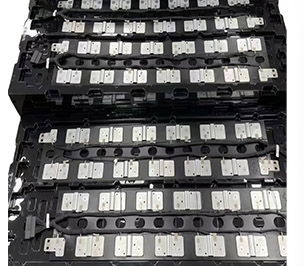
A storage module’s battery wiring harness has two very different payloads, and mixing them up is how most wiring problems start. The power runs move real energy from the cells through the busbar to the inverter. The signal runs do almost no work in the current sense; they sample each cell voltage and the pack temperature, then hand the numbers to the management system.
In a module with a long series string, that sampling job adds up fast. Every cell needs its own tap, so what looks like a single thick cable is really a bundle of routed, terminated conductors, sized and laid out to fit the cell count, the voltage, and the physical shape of the enclosure.
Pick the wrong count, or route the lines poorly, and the pack is already running on bad data before it leaves the factory.
Why Signal Integrity Is a Safety Feature
The battery management system can only protect what it can measure. It is the part that catches an overcharge, an over-discharge, an over-current spike, or a cell running hot, and it is the part that cuts the pack off or rebalances the group in response.
All of it hinges on the incoming signal. A lithium battery wire harness with loose terminations, resistance that drifts as it heats up, or crosstalk from a nearby power run will feed the board numbers it should never act on. The pack keeps running, but now its safety logic is guessing.
Designers treat the sampling lines like precision instruments for exactly this reason. Fine conductors, terminations that lock in place, and routing that keeps the signal away from the noisy heavy-current paths. None of it is glamorous, and all of it shows up in the field later.
From Cells to Protection Logic
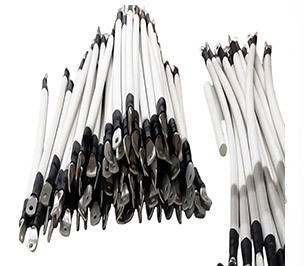
This is where the two halves of the harness start to talk. The management board pulls voltage and temperature from the sampling lines, compares one cell against the next, and steps in the moment something drifts out of line.
The window is tight. A string can run anywhere from two cells in series to twenty, and the margin between a healthy group and an uneven one is thin. The harness is what gets those readings across with enough precision for the board to do anything about them.
It is also where a one-size-fits-all approach breaks down. Cell count, series configuration, terminal style, and the space inside the enclosure all push the design in a different direction, and a harness drawn for one battery format rarely drops into another without rework.
What Built to Withstand Really Means
Inside an energy storage enclosure, a bms wire harness sits in a hot box next to equipment that vibrates, and someone has to reach in to service it every so often. Insulation that softens under heat, or a connector that loosens after a dozen pulls, will not fail at commissioning. It fails months later, when it is inconvenient.
The materials in storage wiring are picked to match that kind of life. Oxygen-free copper keeps conductivity steady, the insulation is rated for the actual operating temperature, and the power conductors carry a flame-retardant rating such as V0.
Take a battery protection board data acquisition line for lithium packs. It is built for series strings from two to twenty cells, with JST, PH, or XH terminations that survive repeated insertion, and power conductors to UL 1007/1015 that are RoHS and CE compliant and pass a 500 V AC withstand test.
Where Cables Meet Certification and Compliance
Wiring is also a compliance point, not just a performance one. Stationary and transportable battery systems get assessed against standards like IEC 62619 and UL 9540, and those tests assume every component in the cabinet, cable included, behaves predictably under the stated electrical and thermal conditions.
A conductor that is not rated for the current it carries, or insulation that sits below the temperature the pack actually reaches, becomes a non-conformance that can show up years after installation.
For a distributor or integrator, the check is small but worth doing: make sure the conductors, insulation, and connectors are documented for the voltage, temperature, and cycle life the application really needs.
The Takeaway for Anyone Specifying Storage Wiring
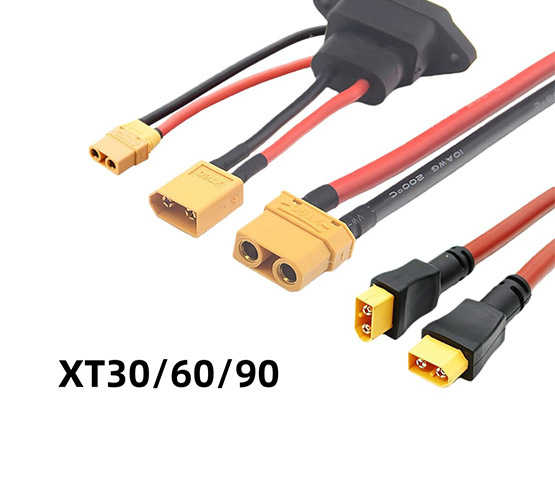
Strip it back and energy storage cables separate the packs that work as rated from the ones that only look rated on a data sheet. The power conductors move the energy; the signal harness keeps the battery management system honest.
The whole assembly has to keep doing both, through heat, vibration, and service cycles, while staying inside the standards the system is certified to. When you spec or buy, ignore the headline kilowatt-hour number and look at how the cells are actually wired, balanced, and protected.
Songyuan wiring harness builds the battery and protection-board harnesses for these modules, so the cell count, the voltage window, and the terminal type are where a useful conversation starts.
FAQ
What is the main job of an energy storage cable?
It carries power from the cells, through the busbar, to the inverter, and it carries the sampling signals that let the battery management system watch voltage and temperature. Both jobs run at the same time.
Why is the bms wire harness considered a safety component?
Because the pack’s protection depends on those signals. If the voltage or temperature readings drift, the overcharge, over-discharge, and over-temperature protection can trip at the wrong moment, or miss it entirely.
What cell ranges do these harnesses need to support?
It depends on the module. A typical battery protection board data acquisition line is built for series strings from two cells up to twenty, with JST, PH, or XH terminations chosen for a secure, repeatable connection.
Does the insulation have to be rated for heat?
Yes. Storage cabinets see real temperature swings, so the conductors use insulation rated for the operating range, the power conductors usually carry a flame-retardant rating like V0, and the assembly passes a 500 V AC withstand test.
Which standards should a storage harness align with?
The system is typically assessed against standards such as IEC 62619 and UL 9540, and the cabling has to behave predictably under the electrical and thermal conditions those standards set.


