
Why Fan PCBA Connections Fail After Assembly
Time : September 30, 2026 View : 187
A rechargeable fan works with its circuit board lying on the bench, then cuts out after the housing is closed. That change gives the appliance team a useful clue. Before replacing the PCBA, it is worth examining what closing the enclosure did to the wires and connectors. The same components are now in a different physical arrangement, and a terminal wire harness can expose a weakness that an open assembly never revealed.
The enclosure changes the connection
Closing the housing can turn a relaxed lead into a loaded one. A molded rib may push the wire sideways, a battery holder may trap a loop, or the board’s final position may tighten a short branch. These are possibilities to investigate, not a diagnosis that applies to every intermittent fan.
The first useful comparison is the assembly’s physical state. If the fault appears only after closure, the team has a reason to compare connector seating and wire clearance before and after that step. Repeatedly exchanging the battery, board and motor without preserving that comparison can make the original condition harder to understand.
A plug can fit without matching correctly
Connector compatibility involves more than the number of positions. The housing, terminal and board header need to be a specified mating combination, with the correct circuit assignment. Similar-looking white housings are not enough evidence. A connector family name helps narrow the search, but the exact parts still matter.
A retained housing can hide a loose terminal
Housing retention and terminal retention solve different problems. One keeps the connector halves together; the other keeps an individual contact in its intended position. A housing that appears seated does not by itself prove that every terminal is fully retained or that each crimp is sound.
The wire needs room to leave the board
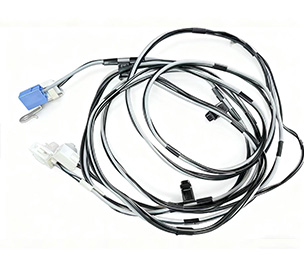
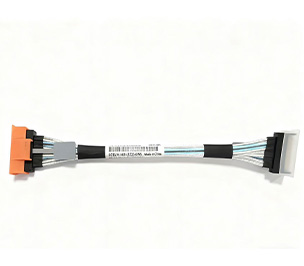
The area immediately behind the connector deserves as much attention as the connector itself. If the lead turns sharply as it exits, movement of the bundle can load the terminal and board connection. Supporting the harness and allowing a natural exit direction helps keep those forces away from the electrical interface.
A motor terminal wire should reach its destination without relying on the connector to hold the rest of the harness in place. In a compact fan, that may require a different branch length or a nearby fixing point. The aim is a relaxed, repeatable position when the enclosure is assembled.
Excess length creates its own problem. A large loose loop may fit during one assembly and get trapped during the next. The useful allowance is the amount that lets the connector seat and the housing close consistently. There is no universal extra length that works for every board and battery arrangement.
The symptom narrows the question
An intermittent connection is easier to investigate when the observation is specific. “Fan failed” leaves too many possibilities open. “Fan stops after the rear cover is fitted” gives the engineering team a condition it can reproduce and compare. The following distinctions keep the investigation focused on the assembled connection.
|
Observation |
Connection question |
|
Works open, fails closed |
Does the cover load or trap a branch? |
|
Fault follows connector movement |
Are mating and terminal retention sound? |
|
Fault occurs at a higher setting |
Is the supply path dropping voltage under load? |
|
One unit differs from the rest |
Is its branch position or termination different? |
The higher-setting observation needs care. A supply interruption or voltage drop may affect operation, but the motor, driver, battery and control logic can also contribute. A dc motor wire is one part of that circuit. Treating the symptom as proof of a harness defect risks replacing a good part and missing the actual cause.
A controlled comparison is more useful than an improvised tug test. On an appropriately protected engineering setup, the team can record the supply behavior and reproduce the assembly condition. Pulling on wires or forcing a connector can introduce damage and change the very fault being investigated.
Matching the battery and motor branches to the PCBA
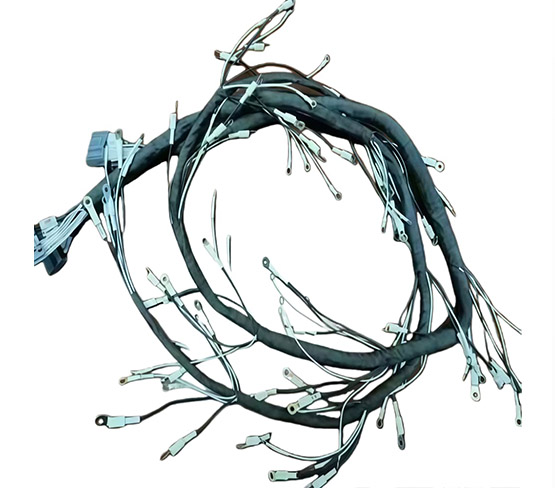
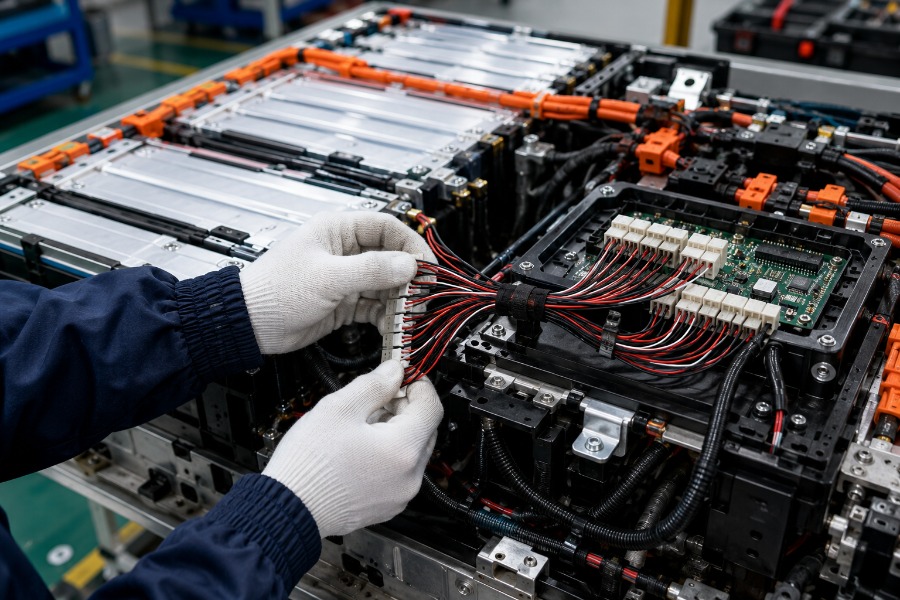
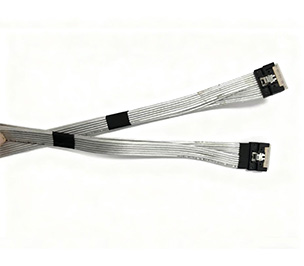
A compact fan needs its electrical interfaces and physical route to agree. The battery wiring harness must match the board’s battery connection, while the motor branch must match the drive output and DC motor terminals. A shared housing color or similar wire color cannot establish either relationship.
That fit is where application-specific terminal leads can help. Songyuan wiring harness provides fan battery terminal connections for the battery, motor and control board, with options for terminal type, wire length and conductor size. Those choices let a fan assembly accommodate its actual internal space instead of relying on a lead that merely reaches across the open bench.
A smart appliance wire harness also needs to remain repeatable during assembly. The useful question is whether another operator can place the branches in the same clear space and fully seat the same connectors. A layout that works only when someone carefully tucks a loose loop into a particular corner is worth reconsidering.
Three observations make that comparison easier to preserve:
- The connector sits fully mated before and after the cover is fitted.
- The battery and motor branches clear the enclosure’s ribs and fasteners.
- The installed leads rest without sustained tension at the board header.
A connection that survives the closed housing
The finished enclosure is part of the connection problem. A fan PCBA should be assessed with its battery and motor leads in the positions they will actually occupy. When a bench-working unit becomes intermittent after assembly, connector matching, terminal retention and branch support offer a coherent place to investigate. The outcome should be a connection that stays stable through normal assembly, without depending on a technician’s last-minute adjustment.
Häufig gestellte Fragen
Why does the fan work before the cover is fitted?
The open arrangement may leave wires unloaded and connectors undisturbed. Closing the housing can change that condition. It is a useful clue, but the board and other components still need consideration if the connection checks do not explain the fault.
Can PH and XH connectors be exchanged?
They should not be treated as interchangeable. Use the specified housing, terminals and mating header for the particular assembly. A similar appearance does not establish mechanical fit or the correct electrical connection.
Does a locking connector eliminate intermittent faults?
A suitable lock helps resist accidental unmating. It cannot correct an incomplete crimp, a displaced terminal, an incorrect pin assignment or a damaged conductor. Retention is one part of the connection.
Should every fan lead be made longer?
No. Additional length can relieve tension but can also create a loop that becomes trapped. The appropriate length depends on the installed route, connector access and available support points.
Do wire colors identify the battery polarity?
Colors can support identification when they follow the assembly’s defined circuit assignment. They are not a substitute for checking that assignment. A replacement lead must preserve the correct connections at both ends.