

How Does a Medical Wire Harness Fail After Cleaning
Time : August 21, 2026 View : 297
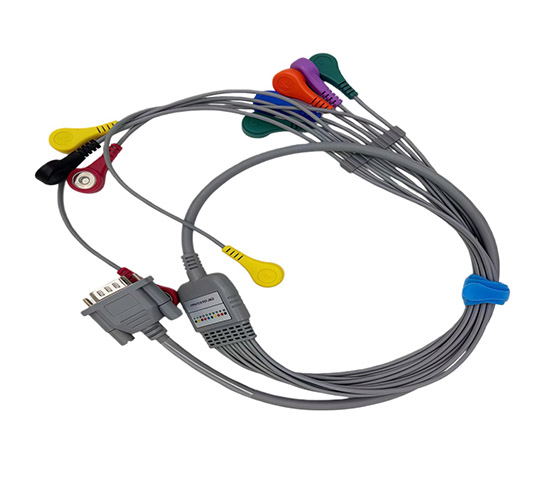
A cable that works at the start of a shift but drops a signal after cleaning rarely has one simple fault. Movement, pulling, coiling, fluid exposure, and connector handling act on the same assembly. A medical wire harness must be judged by the use cycle it survives, not only by its first continuity reading. The useful question is where stress entered and which evidence separates a material problem from an assembly problem.
The timing of the fault is the first clue
An intermittent fault after movement calls for a different investigation than one after wiping. Record the last action before replacement: was the lead flexed near the plug, pulled from a tray, coiled, or cleaned? This timeline helps show whether the medical equipment wiring harness is responding to fatigue, chemical exposure, or a connector interface that has lost its margin.
Movement-related faults usually cluster at transitions
Repeated bending does not load every millimeter equally. Stress often collects where a soft cable enters a rigid plug, clip, or branch. If touching that transition changes the symptom, inspect strain relief, bend radius, crimp support, and shield termination. A flexible cable can still fail early when its entry forces a sharp local bend.
Cleaning-related faults can be delayed
Cleaning damage may not look dramatic on the day it occurs. Repeated exposure can change stiffness or sealing behavior, especially when concentration, contact time, or drying is outside the qualified process. A medical cable assembly may pass a bench check but develop leakage, shield instability, or intermittent contact after another handling cycle.
Four stress points hide behind the same symptom
The same error can come from different locations. The table narrows the first inspection without pretending that one visual clue proves the root cause.
|
Observed pattern |
Likely stress point |
First inspection |
Do not assume |
|
Drops out when the plug is moved |
Connector transition or crimp support |
Strain relief, pin retention, continuity while flexed |
The cable core is broken |
|
Fails after repeated wiping |
Sheath, seal, or molded entry |
Surface change, swelling, cracks, seal compression |
The cleaner is harmless because the first cycle passed |
|
Signal noise rises after handling |
Shield, drain, or ground termination |
Shield continuity and termination movement |
More braid automatically means better EMC |
|
Works dry but fails after wet cleaning |
Mated interface or branch seal |
Leak path, connector cavity, dry-out recovery |
A high IP label covers the complete assembly |
A repair that changes only cable length may leave the real stress untouched. Inspect a medical equipment wiring harness as conductors, terminals, seals, shields, and routing supports, tying each interface to the observed failure pattern.
The assembly must survive the real use cycle
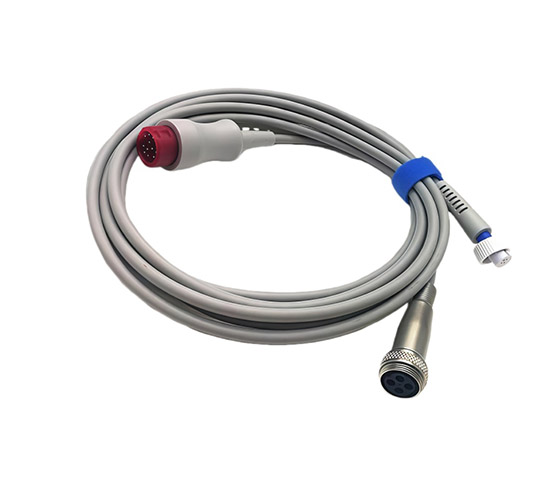
A reusable lead is not defined by transmission alone. Describe how the operator bends, pulls, wipes, coils, and reconnects it, then turn those actions into repeatable lab conditions. That separates choosing a flexible cable by feel from qualifying it for the cycle.
Match flex design to the motion
Flexibility is a system property, not just a soft sheath. Stranding, conductor lay, jacket hardness, bend radius, branch support, and connector relief all affect fatigue. A handheld probe lead may need a different construction from a fixed loom. Testing should reproduce the direction, radius, and hold points of normal handling.
Keep cleaning compatibility tied to the material stack
A waterproof wire harness is not automatically resistant to every cleaning process. Qualification covers insulation, sheath, overmold, terminal seals, connector body, and labels. Check the actual agent, dilution, contact time, drying, and cycle count. A jacket-only test does not cover the mated interface or branch entry.
*Define the normal handling motion and the worst reasonable operator motion.
*Record the cleaning agent, concentration, temperature, contact time, and cycle count.
*Inspect connector transitions, branch exits, seals, and shield terminations after cycling.
*Repeat continuity, insulation, pin mapping, and signal checks in the conditioned state.
*Keep a failed sample for teardown instead of testing only a replacement part.
Turn the complaint into a repeatable verification cycle
Start with a baseline: photograph the assembly, record pin mapping, measure continuity and insulation, and capture the signal under load. Flex the lead around the permitted radius at connector and branch points. Apply the approved cleaner at its real concentration and contact time, use the drying condition, and repeat the checks.
Test order matters. After a long rest, a temporary moisture path or displaced contact may disappear. Check immediately after conditioning, while flexing the same transition, and again after recovery. Set limits for continuity, insulation, shield integrity, retention, appearance, and the device signal that matters.
Use failure evidence to change one variable at a time
When a sample fails, change one variable. A larger radius tests mechanical margin; a different sheath tests chemical compatibility; a revised overmold tests strain transfer; and a new termination tests contact stability. Otherwise plausible substitutions remain unproven.
What ชุดสายไฟซงหยวน can confirm from the device context
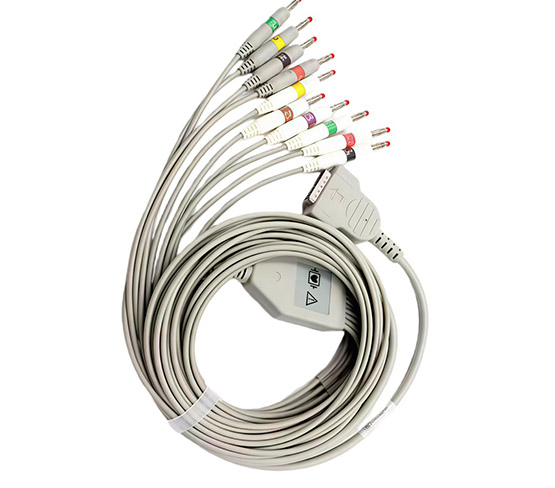
The device function determines which construction deserves testing. In our medical range, a GE ECG lead uses shielded medical PVC and lists more than 10,000 bends; a Holter lead uses ultra-fine soft PVC and lists at least 10,000; and a monitor CO cable uses medical-grade TPU and lists at least 8,000. These are product-specific references, not a universal promise for every medical cable assembly.
For harsher cleaning or surgical use, our microwave-therapy cable combines PTFE insulation, a medical silicone or PU sheath, shielding, sealed connectors, and specified resistance to high-temperature and high-pressure cleaning, EO, and alcohol. We use the device’s motion, interface, and cleaning sequence to decide which details belong in a ชุดสายไฟแบบกำหนดเอง review rather than treating a generic sealed harness as the answer.
The practical takeaway
When a reusable medical harness fails after cleaning, do not choose a thicker cable by instinct. Recreate the use cycle, inspect transitions, and verify the material stack through the mated connector. A water-resistant build may solve one exposure path, while better relief solves another. The replacement is credible only when the same cycle no longer reproduces the fault.
คำถามที่พบบ่อย
Why does a medical harness work before cleaning but fail later?
Cleaning can reduce mechanical or sealing margin gradually. The assembly may pass an early continuity check, then develop leakage, contact instability, or shield movement after repeated chemical exposure and handling.
Which area should be inspected first?
Start at connector entries, branch exits, clips, and molded transitions. These locations transfer bending and pulling forces into the conductor, shield, seal, and terminal at the same time.
Can a flexible cable prevent repeated-bending failure?
It can improve fatigue margin, but only when its stranding, jacket, bend radius, relief, and termination suit the motion. A flexible cable with a sharp entry or unsupported branch can still fail early.
Does a waterproof wire harness prevent cleaning damage?
Not by itself. Water protection addresses a defined ingress path; it does not prove compatibility with a cleaner, repeated flexing, drying, connector chemicals, or every exposed material in the assembly.


ข่าวที่เกี่ยวข้อง
-
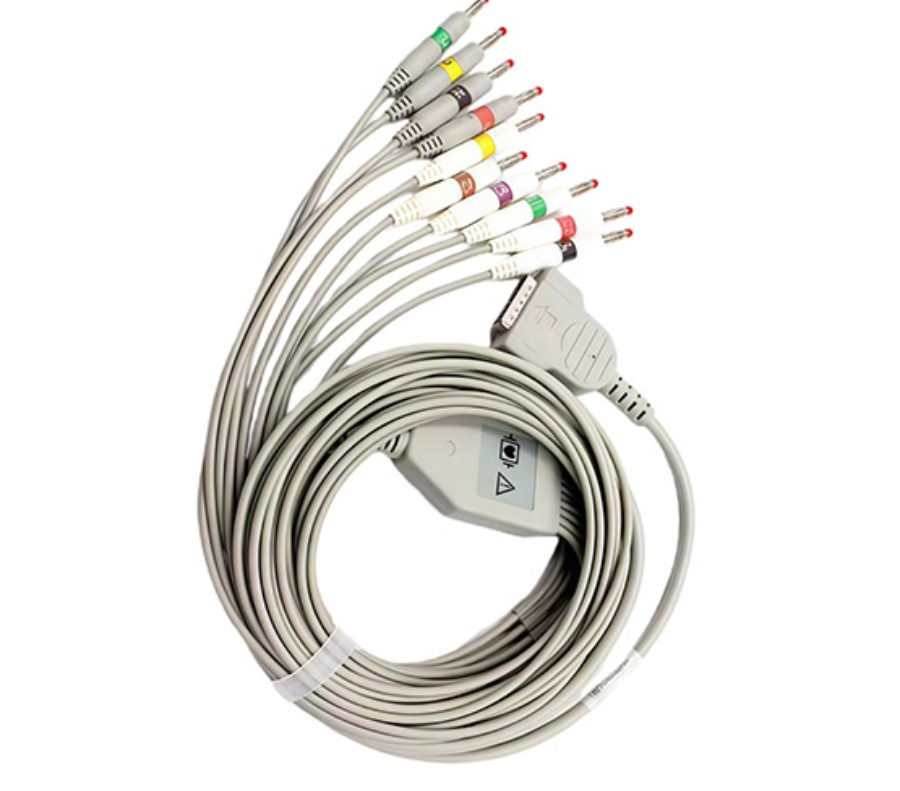 What Is a Medical Wire Harness?
-
How Does a Medical Wire Harness Fail After Cleaning
-
 การออกแบบสายเคเบิลโดรนนั้นสร้างสมดุลระหว่างน้ำหนักและแบนด์วิดท์ได้อย่างไร
-
 สายเคเบิลและชุดสายไฟแบบกำหนดเองสนับสนุนการออกแบบเครื่องใช้ไฟฟ้าในบ้านอัจฉริยะได้อย่างไร?
-
 ชุดสายไฟสำหรับโดรนรองรับโดรนบินนอกระยะสายตา (BVLOS UAVs) ได้อย่างไร
